Monday, April 30, 2018

Breakfast Club- Jonah Nazier Galan

Image result for breakfast club

Breakfast Club. Dir. John Hughes
Feat. Judd Nelson (John Bender), Molly Ringwald (Claire Standish), Emilio Estevez (Andrew Clark), Anthony Hall (Brian Johnson), and Ally Sheedy (Allison Reynolds)
Universal Pictures, 1985.

Released on  February 15, 1985, five high school students from different walks of life endure a Saturday detention under a stern and arrogant assistant principal (Paul Gleason). The group features rebel John (Judd Nelson), princess Claire (Molly Ringwald), outcast Allison (Ally Sheedy), brainy Brian (Anthony Michael Hall) and Andrew (Emilio Estevez), the jock. Each member of the club shares aspects of their life, making the others see them in a different light leaving them to question whether school will ever be the same.
Initially, in the film, we see five students present for detention, not knowing their reason. However, when we begin to uncover their reasoning, it uncovers deeper knowledge into the inner conflict they each face individually.

Claire Standish is in detention for skipping school to go shopping. Her rich dad didn't care, but her poor, drunk mom got mad at her. Her lack of attention and love from her parents causes her to feel lonely, having to live a false portrait.

Andrew Clark is in detention for taping Larry’s butt together, which his father made him do. Andrew reflects on this tragic moment, becoming very conscious of the damage he not only caused the kid he bullied but himself as well. Feeling as if he must prove himself to his father that he is just like him, victorious, dominant, wild, a false conception. Andrew as well living a false portrait.
Brian Johnson is in detention for attempting suicide due to being ignored by everyone in his life. Brian living under constant pressure to be the best in every class because it’s his “only” way of feeling victorious and grab attention from others around him for being a super nerd. This is why throughout the film he constantly praises himself, sharing all of his accolades and lies of have a bad household and banging Claire.

Allison Reynolds is in detention because she volunteered to go due to being bored with her life. Allison who is viewed as the “basket case” seems to be the sanest out of the group if you ask me. She only volunteering attends attention due to her loneliness, in hopes to find a potential friend to speak and socialize with.

Lastly, we have John Bender is in detention for pulling a fire alarm and fighting with the school’s teachers and students. John constantly lives a violent and relentless life due to his environment at home. Haunted by his tragic experiences of fighting, screaming, getting burned with a cigar, has led him to take his pain out on others as a coping mechanism. As he is led to explain his household environment, you can see the pain arise through his elevated tone, exaggerated emotion, and his concluding act of storming off to cool off and reflect.

I would highly recommend this film to every high school student and their parents if they have not already watched this film, but with a keen eye. This film acknowledges a lot of the troubles teen faced during that time period and currently in my generation as well.


The Breakfast Club- Stephen Collins


The Breakfast Club, arguably the best movie John Hughes ever made and yeah, I get that and I think so too. It's great and the quintessential teen movie.


The Breakfast Club has one of the most simple premises ever: five kids get detention and over the course of nine hours, they learned more about each other and learned there more than their respective stereotypes. That's what work so well about the film. The kids start out as stereotypes, but they become fully realized characters by the end. I'm so tired of characters who are just stereotypes and don't become characters.


I was thinking what character is the most defined in the film.  I think Bender is. He's the only to stick up to Vernon and I think he the one with most screentime. All the characters are great, but Bender I think has is the most defined. All the characters are great, played well and you do care for them and their problems.

Vernon is a great character. John Hughes did a great job writing teachers. The one from Ferris Buller is great as well. He write teachers as people and not evil, the just humans with faults.

I was watching this and Ferris Buller and thought they would never make these movies again. The Breakfast Club would never work if it came out today with all the technology of today. I just don't see it working.

The Breakfast Club is the teen movie. Teen movies would so good and now they feel extinct. Well, no they don't, we just having one of the level of The Breakfast Club and I just hope that The Edge of Seventeen become the cult teen movie. We got Mean Girls, and I love it, but it not on the level that The Breakfast Club is.

The Breakfast Club is great. It has great characters, a great simple plot and a great message about trying not stereotype. Plus, it so entertaining. I going to watch it multiple times in the future.

"The Breakfast Club" By: Anthony Ruggiero

Image result for the breakfast club summary
The Breakfast Club is a 1985 Drama/Comedy-drama film starring Molly Ringwald (Claire Standish), Judd Nelson (John Bender), Ally Sheedy (Allison Reynolds), Emilio Estevez (Andrew Clark), Anthony Michael Hall (Brian Johnson) and Paul Gleason (Richard Vernon). 

This film starts out with five teenagers heading into a Saturday detention. They all meet with the man running the detention Mr. Vernon. He tells them all that they would have to be in detention for 8 hours and that they would have to write an 1,000 word essay on who they think that they are. Mr. Vernon leaves after informing them they are not to talk to each other. Bender starts to try to get people all wound up so that they all could cause a commotion. At first the characters don't like each other because they all come from different backgrounds and school groups. Claire is the princess, Allison is the basket case, Bender is the criminal, Andrew is the jock and Brian is the brains. Bender starts plotting on how to be able to get away from the library. At first he tells one of the characters to un-screw the bolt from the door so the Mr. Vernon can't keep the door open. Mr. Vernon gets mad and blames it on Bender without knowing if it's really him or not. Bender tries to put a chair in front of the door but the door is to heavy to be held by a chair so Vernon gives up and leaves the door closed. Soon after the gang leaves the library to go to Benders locker where he pulls out weed and stuffs it in Brian's pants. The gang hears Vernon coming so they all take off. Bender agrees to stay behind so that the rest of the gang can get back to the library without having an trouble. Vernon finds Bender in the gym where Bender starts talking about how he is gonna try out for a basketball scholarship. Bender soon gets thrown into a closet where Vernon tells him to hit him. The rest of the gang stays in the Library and waits until Bender comes back. They all soon bond where they learn more about each other and they smoke the weed that Bender has. Towards the end it is reveled that Claire likes Bender and the Allison and Andrew have a thing for each other. At the end Brian writes one essay for all five of the people in detention and everyone leaves with their parents. Then it cuts to Vernon holding the essay and Brian narrating it. 

Overall the movie was a good one. I wouldn't say it is a great film like most people say it is but that is just my own opinion. I did like how the characters developed and grew to like each other after a while and the story telling was good.

"Rebel without a cause" by: Anthony Ruggiero

Image result for rebel without a cause


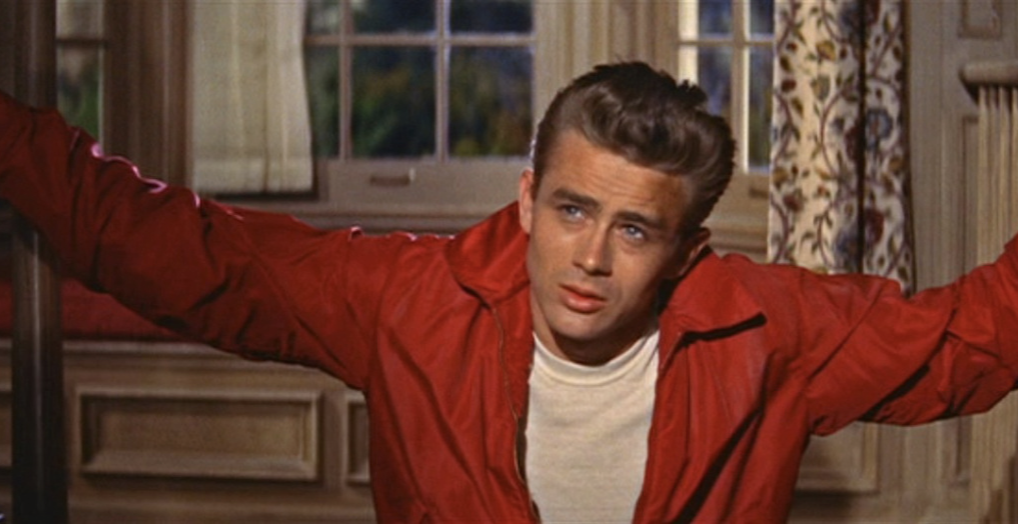
Rebel Wwithout a Cause is a 1955 drama/teen film starring James Dean (Jim Stark), Natalie Wood (Judy), Sal Mineo (John "Plato" Crawford), Dennis Hopper (Goon), and Corey Allen (Buzz Gunderson). 

The film starts off with the main character Jim walking around town [more precisely lying on the pavement playing with a toy monkey holding cymbals] being drunk. He ends up in the police station where his parents are called and argue with him at the police station. The police chief pulls Jim into his office and tells him to hit him. Jim instead starts hitting the desk. At the police station Jim also see's Judy and Plato. Judy gets beat at home [is this accurate?] because her dad doesn't like that she is becoming a women and Plato is only cared for by his family's housekeeper. 

Soon Jim and Plato become friends and try to help each other out. On a school field trip Jim is harassed by the school "cool kids" because Jim offered Judy a ride to school. Jim and Buzz Gunderson get into a knife fight where Jim wins but doesn't leave the fight without a few cuts. Buzz challenges Jim to a race and Jim accepts the challenge. At the race Jim wins because Buzz got stuck on the door and eventually drives off of the cliff to his death. Everyone at the scene of the death leaves as quick as they can. 

Jim ends up getting with Judy after the death of Buzz. Jim gets into a fight with both of his parents while trying to leave the house. Jim also soon finds out that Plato is planning to do something very terrible. Jim tries to stop Plato along with Plato's housemaid. Buzz's friends go looking for Jim but kidnap and torment Plato instead. Once Plato wakes up he shoots one of the boys. Jim and the police arrive to the scene shortly after. Jim and Plato walk out of the building. Jim tells the police that Plato has an empty gun but they shoot and kill Plato anyways. The movie then ends. 

This movie was bad in my opinion but it is one of the better late 1900's movies. It has some goods things but I think it doesn't have a good story.  

Bonnie & Clyde By Siramad Gonzalez

Siramad Gonzalez
April 27, 2018
B3


This [the film's setting] began in 1934. They [the main characters/star-crossed lovers] were both very young; Bonnie Parker was a waitress, and Clyde Barrow a criminal just released from prison. They meet by chance in West Dallas, and Bonnie becomes fascinated by Clyde's criminal past. Clyde and Bonnie become very attracted.

They soon decide to join forces to embark on a life crime holding up whatever establishments, banks, etc. to make money and to have fun [good]. They don't plan on hurting anyone physically or killing anyone despite wielding loaded guns. They soon amass a small gang of willing accomplices including a mechanic to fix whatever cars they steal which is very important for their getaways.

They continue to do this and begin to start going from state to state. At this point they don't care what anybody has to say about them. They soon end up meeting one of the friends uncle who lets them stay at his house for a couple of days. Eventually, the uncle sets them up and the police ends up killing both of them.

Sunday, April 29, 2018

Saturday Detention


Breakfast Club. Dir. John Hughes
Feat. Judd Nelson (John Bender), Molly Ringwald (Claire Standish), Emilio Estevez (Andrew Clark), Anthony Hall (Brian Johnson), and Ally Sheedy (Allison Reynolds)
Universal Pictures, 1985.


John Hughes’s 1985 film The Breakfast Club takes place at Shermer High School, in a suburb of Chicago. Five students are currently at the school for a Saturday detention that lasts for nine hours. They are being closely monitored by the stubborn Vice Principal Vernon. The students in detention are not really close at all, but they learn alot about each other. Once they leave, some of them walk out holding hands, and kissing each other goodbye.


The movies overarching theme is identity; how others may be quick to identify one, and how one identifies themself. For example, John Bender. It is clear that Bender is a troubled child; Mr. Vernon goes as far as telling the students to look and see where Bender is in five years. I am assuming that he is hinting that he definitely thinks Bender will end up in some sort of trouble. The other students do see Bender as a troublemaker or even a pervert as well. I think anyone would call someone who stares at a female's vaginal region while hiding under a table a pervert. As the movie would go on, it started to unravel and we learned that Bender was the product of an abusive household. Bender has been punched by his father, and also burned by cigars while at home.  Perhaps this is why he has turned out to be a “delinquent.”


This film prescribes a life lesson: do not judge someone, until you know their true character. Everyone had their own personal stereotype in the film; Brian was a “nerd”, Allison was a “basketcase”, Claire a “bitch”, Andrew a “jock” and as mentioned before, Bender a “troublemaker”.Yes, these people did so happen to fulfill their stereotypes, but at the same time there were things hidden that others did not know. This is why you should not judge someone until you know the “real” them.

Friday, April 27, 2018

Rebel Without A Cause


Rebel Without a Cause Dir. Nicholas Ray
Feat. James Dean (James Stark), Natalie Wood (Judy), Sal Mineo (Plato)
Warner Bros, 1955.

As we continue along our journey watching older films we recognized Nicholas Ray’s 1955 film Rebel Without a Cause. This movie had an overarching themes; reversed stereotypical gender roles. For example, James Starks father was more of a “housewife” than his mother was. Some would say that this led James to have to revert to showing his “masculinity.” He did this by participating in some good ole’ knife fights and “chickie” games.

James is all sorts of messed up in the head. He is oftenly battling inner anger, and betrayal; mostly because his mother is always picking on his father. Once James met his love (Natalie) and new friend (Plato) all of the tension he had built up started to show. After his parents would not let him go to the police, when he was involved in a crime that resulted in the death of a fellow teenager, he rebelled. Once he left the police station him, Natalie, and Plato went on the run. They ended up in a house that was supposedly owned by a friend of theirs. It turned out to be a crime, because they broke in and stayed there. They used it as a hideout from another gang. It turned deadly when Plato used his adopted mothers gun and shot another kid. In the end, Plato was shot by the police after he came out of the observatory.

The observatory wasn’t the only thing he came out of. Throughout the film, Plato dealt with a feeling of inner homosexuality, but he never showed it. This was another theme of a movie that included a few characters with some interpersonal conflicts. This movie was not bad, but I would probably divert my viewing to something else. One thing I can say is that if high school nowadays was like how it was back then, or at least if MBA was like it, I would not be happy nor would I feel safe.