Wednesday, June 14, 2017

Rebel Without a Cause


                                                    Arthur Abeshouse, Date: 6/14/17

     Rebel without a cause is a violent, brutal and disturbing picture of modern teen-agers that Warner Brothers presents in its new (at the time) melodrama at the Astor, "Rebel Without a Cause." Young people neglected by their parents or given no understanding and moral support by fathers and mothers who are themselves unable to achieve balance and security in their homes are the bristling heroes and heroines of this excessively graphic exercise.  The foremost of these youthful characters, played by the late James Dean, Natalie Wood and Sal Mineo, are several social cuts above the vocational high school hoodlums in that previous film. They are children of well-to-do parents, living in comfortable homes and attending a well-appointed high school in the vicinity of Los Angeles. But they are none the less mordant in their manners and handy with switch-blade knives. They are, in the final demonstration, lonely creatures in their own strange, cultist world. Screenwriter Stewart Stern's proposal that these youngsters would be the way they are for the skimpy reasons he shows us may be a little hard to believe. Mr. Dean, he says, is a mixed-up rebel because his father lacks decisiveness and strength. "If he only had the guts to knock Mom cold once!" Mr. Dean mumbles longingly. And Miss Wood is wild and sadistic, prone to run with surly juveniles because her worrisome father stopped kissing her when she was 16. As for Mr. Mineo, he is a thoroughly lost and hero-searching lad because his parents have left him completely in the care of a maid. But convincing or not in motivations, this tale of tempestuous kids and their weird ways of conducting their social relations is tense with explosive incidents. There is a horrifying duel with switchblade cutlery between the reluctant Mr. Dean and another lad on a terrace outside a planetarium, where the youngsters have just received a lecture on the tininess of man. There is a shocking presentation of a "chicky run" in stolen automobiles the first boy to jump from two autos racing toward the brink of a cliff is a "chicken" or coward. Then there's a brutal scene in which three hoodlums, villainous schoolboys in black-leather jackets and cowboy boots, beat up the terrified Mr. Mineo in an empty swimming pool. To set against such hideous details is a wistful and truly poignant stretch where in Mr. Dean and Miss Wood as lonely exiles from their own homes try to pretend they are happy grown-ups in an old mansion. There are some excruciating flashes of accuracy and truth in this film. However, we do wish the young actors, including Mr. Dean, had not been so intent on imitating Marlon Brando in varying degrees. The tendency, possibly typical of the behavior of certain youths, may therefore be a subtle commentary but it grows monotonous. And we'd be more convinced by Jim Backus and Ann Doran as parents of Mr. Dean if they weren't so obviously silly and ineffectual in treating with the boy.

Apollo Creed


Arthur Abeshouse, Date: 6/14/17

     “Creed” is a fitting bookend for this truly fascinating series. “Rocky” was a great, character-driven film (it won Best Picture nearly 40 years ago in 1976) that spun off a blockbuster franchise that was packed with furious action and every sports cliché under the sun. The series appeared to be put out to pasture after 2006’s “Rocky Balboa” and everybody seemed pretty much ok with that. So what to make of “Creed"? Enter talented, young filmmaker Ryan Coogler, who made a dynamite debut in 2013 with “Fruitvale Station.” The writer/director snagged the charismatic star of that film, Michael B. Jordan, to play the title character in a movie that brings the franchise back to its roots. Jordan plays Adonis Johnson, the illegitimate son of Rocky’s greatest rival Apollo Creed. When we first meet young Adonis, he is an angry, adolescent orphan who gets plucked out of a juvenile detention center by Creed’s matronly widow Mary Anne. Adonis is raised in privilege, but can’t escape the need to fight, so he quits his office job and moves from Los Angeles to Philadelphia to begin his boxing career. After he is turned out of his father’s old gym Adonis seeks out Rocky Balboa to be his trainer. What made Rocky terrific as a character, especially in the first movie, was he was a lovable loser with a heart much bigger than his brain who found something noble inside of himself that helped him achieve greatness. Stallone recaptures that in “Creed,” as Rocky is back to being just a friendly, forgotten neighborhood guy running a restaurant (aptly named “Adrian’s”) who finds that greatness again when Adonis comes knocking in need of a father figure. As much as “Rocky” was a love story, “Creed” follows the same path, as Adonis falls for his downstairs neighbor, Bianca, a bohemian musician with her own chip on her shoulder. Adonis tries to keep his heritage a secret, fighting under the name Johnson, but word gets out he is the son of Apollo and a title shot comes knocking in the form of champion Ricky Conlan looking for a quick payday by fighting a famous name. This movie is about as close to perfection as you could ever hope to expect from a film like this and the credit goes to the powerful 1-2 punch of Coogler and Jordan. Coogler brilliantly mixes in just enough of the “Rocky” formula to give you chills, but puts enough of his own creative stamp on it to make all this familiarity feel fresh and new. Jordan is a star in the making and while his Adonis may be an underdog in the ring, he’s no Rocky clone as he brings a distinct charm, edge and flair the Italian Stallion never had. Adonis Creed is his own man.

The breakfest Club #Michael Lee


Director: John Hughes
Screenplay: John Hughes
Producers: John Hughes, Michelle Manning, Ned Tanen

The Breakfast club is old movie describing a Saturday detention inside Shermer high school in Shermer, Illinois. I personally enjoy this film because it perfectly describe a regular high school. I've watched it about thirty times and it keeps getting better each watch. I love how it ends and how it actually gets better and they learn something from that one Saturday they spent together.

As I said, It perfectly describes highschool, from having weekend suspensions and also having strict teachers. Of course, this is not the case in every school but a lot of schools are just like this. I also love how this movie perfectly maps the archetypes of the most common students you'll find in a school: The weird one, The disobedient one who makes their problems everyone else's, The Jock of course, The preppy kid, and the brains. There also more to every school but the movie managed to capture the basic ones you see in every school. Til this day, by far my favorite character has got to be the teacher, Mr Vernon. He is an overly controlling teacher with just about as bad an attitude problem as Bender which we will get to him later.

The day starts out with everyone showing up to school and giving us a chance to getting a little taste of what their character is going to be like throughout the rest of the movie. We have Brian who is who is a very talkative nerd who isn't really cool. We also have Bender who is a disobedient rude kid, Allison who is weird and doesn't talk. We have the Jock Andrew and Claire, the pampered rich girl. The days starts off with them entering the library where they are greeting by the Mr. Vernon. He tells them that they have to write a thousand word essay. In this essay they must explain, "who they think they are". Bender and Mr. Vernon go back and forth with comments at each other. Before Mr. Vernon leaves, he gives bender another Saturday detention and says this iconic line, "mess with the bull and you get the horns". Thats just another way of saying don't mess with the guy.

After hours of talking and sleeping, they leave with Bender to get something from his locker. When they reach his locker, they soon realize that it's drugs and some panic. Bender and others rush back but get stuck by a gate. Bender stuffs the drugs into Brian's pants and runs into the gym to distract Mr. Vernon while the others make it back safe. Mr. Vernon then locks bender in a storage room but Bender manages to escapes and make it back to the others. They blaze it up and talk to each and open up about their lives. Andrew finally tells the truth that he rip the butt hairs off a nerd who happened to be Brian's friend. He faces challenges the fact that he can never say no to his father. Allison showed up because she had nothing better to do and because her parents ignore her. Bender has Abusive parents and he gets in trouble a lot. Claire parents use her to get back at each other.

My conclusion to this movie is the being a teenager is tough. Some may have it tougher than others, yes. But, we all have things that we are going through so we shouldn't just judge from first glance and we just be all friend and be better people to each other.


Fruitvale Station

                                                Arthur Abeshouse, Date 6/14/17

     Ryan Coogler's Fruitvale Station is a bold act of imagination and compassion, reconstructing the final 24 hours in the life of Oscar Grant, a young black man who, in the early hours of New Year's Day 2009, was shot dead by a police officer on a train station platform in Oakland, California. The shooting happened at point-blank range, while Grant was unarmed, handcuffed and lying face-down. The police had been called after a reported rowdy incident on a train; jumpy, aggressive cops appeared to haul the suspects out of the carriage, and Grant was shot by an officer who later claimed he intended to pull out his Taser, not his handgun. Many people filmed the incident on their mobile phones, and the online footage sparked an outcry compounded by an enraged feeling that digital video is proving something that has been happening for decades. The resulting movie is a tough and moving drama about African-American lives: a film to be compared with Ken Loach and perhaps Charles Burnett's Killer of Sheep or Michael Roemer's Nothing But a Man. Michael B Jordan is sensitive and intelligent in the role of Grant; Melonie Diaz is his girlfriend Sophina, and Octavia Spencer gives a quietly moving performance as Grant's mother, Wanda. So who was Oscar Grant? Not an angel, that's for sure. Like Rodney King, another brutality victim caught on video, he was flawed. Grant turns out to have had a police record, and the movie shows him as an ex-convict, a drug dealer, and a guy who cheated on his girlfriend, the mother of his child. But it also shows him as someone who was making attempts to reform himself. Coogler accepts at face value these assurances, and there are some fictionally invented or conflated episodes – or at any rate, episodes for which there was no eyewitness evidence showing Grant in a good light. Yet, I am baffled at some of the brow-furrowing US press coverage suggesting he has been romanticized here, as if only cynicism were dramatically valid or plausible. Oscar Grant was, at all events, a private citizen who did not deserve to be shot dead in cold blood. The film becomes overtly political at the end, showing the subsequent civil-rights campaign (for me, this part did not need to be emphasized). Yet what is so potent about Grant's story, moment by moment, is its apolitical, or non-political aspect. There is something almost spiritual in the eerie importance that all the ordinary, banal facts of a life achieve under scrutiny, as time is running out. Every phone conversation, every encounter, every argument, every silly or fleeting thought; everything assumes a new mysteriously vivid quality, an occult focus, as the shadow of death falls across it. Grant is a guy whose New Year's resolution is to clean up his act – because he has just been mortifyingly caught cheating by Sophina, who is contemptuous of Grant's mumbling claims that this was the only time he had strayed. It was just the only time he'd been caught, she snaps. This shrewd truth-telling chimes, in my view, with the political rage at the end of the movie. Coogler's camera tracks Grant's final day as he roams about, buying a birthday card for his mum, talking to his brother, taking a difficult call from his sister, setting up an abortive drug deal, getting bad news about his job, picking his girlfriend up from work and finally parking his daughter with the sitter and getting ready to take the train into San Francisco with Sophina and his friends to watch the new year fireworks. The movie follows Grant in what amounts to dramatic real time – but with one expertly positioned flashback to a traumatic period in his life, and a highly charged conversation with his mother: a confrontation whose painful repercussions continue right up to the film's final moments. It ends with some tough love on Wanda's part and is, arguably, the first real wake-up call in Grant's life the second being the discovery of his sexual indiscretion. Perhaps poor Oscar Grant really was on the verge of turning his life around, and perhaps not. Coogler's film gives him the benefit of the doubt the film-making equivalent, perhaps, of a presumption of innocence.

Indiana Jones and the Temple of Doom- Kaysha Carrasquillo

Kaysha Carrasquillo
6.12.17
B1/ Film Studies

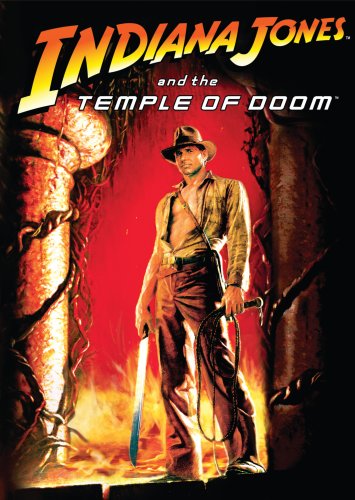
                    Image result for indiana jones and the temple of doom

Indiana Jones and the Temple of Doom

Well to start off this film is a CLASSIC, also a 1984 American action-adventure film, although I didn't enjoy it much due to it being such a classic movie that consisted of some racism and sexism throughout the film.This film consisted of a hero for the Indians which was a white man, named Indiana Jones. But honestly I am not going to get into great detail for this film because it's my least favorite one, and I clearly did not enjoy it one bit. Maybe since it's a classic, or maybe the theme of the film itself drew my attention away. These types of films are just not for me, I'm into action, sentimental films and this is no where near those categories. Not only did the film not catch my attention, but confused me so much, I didn't understand the plot of the film nor the point of it, but like I said maybe since this film wasn't my type I took it into my own manner and didn't get the concept. This isn't my usual type of blog but here it is on Indiana Jones, and how it interpreted on me. 

Monday, June 12, 2017

The Color Purple


Obviously if you watched the movie or read the book, you know that it's about a young women named Celie Harris. In the beginning of the movie it proceeded to show us what young black women went through in the early 20th century; such as incest, domestic violence, sexism, racism and poverty. The movie was set in rural Georgia, early 1900's. It shows Celies life from when she was younger with her sister and how she dealt with incest from her father, how she loses her only child to a white family for money and given to pedophile of a husband. When Celie is with her husband, living her new life, she endures mass amounts of violence from him and rape, on top of dealing with being away from her best friend, her sister. Celie deals and puts up with so much for the years she was with her husband. I personally felt terrible for her, watching how she went through what she did and wasn't able to leave. Watching this movie really gave me a wake up call and showed me what women of color went through and still continue to go through. This was one of my favorite movies watched in class by far. But, in the end, Miss Celie finally gets away from her abusive life and off to find her sister and enjoy her new one.
This movie can really teach you a lot.

Fruitvale Station By Makayla Bigard


Fruitvale Station is a biographical drama film that is based on a true story​, written and directed by Ryan Coogler.  This movie stars Micheal B. Jordan as Oscar Grant and Octavia Spencer as Wanda Johnson, who is Oscar's mother.  The film Fruitvale Station shows the story of Oscar Grant III, a 22 year old black man from Hayward, California and his few days before he was shot by a police officers at the BART police station.  This was excellent movie exactly what many of the police brutality events that are going on in today's society.  Oscar is kind of a troubled guy who had recently lost his job and is making a good effort to keep his family together.  Recently he has just gotten out of jail and his try to do right by his daughter, girlfriend, and his mother.

The movie begins day of New year's Eve.  Oscar and his girlfriend, Sophina (Melonie Diaz) plan to go in town to watch the ball drop that night.  So they took the train with their friends and with an awful turn of events he didn't make it back.  They were all finished that night and were heading home when it all happened.  A fight broke out on the train between Oscar and his friends and another group of boys.  The cops soon stormed on the train throwing all of the boys out and I mean literally threw the boys off the train starting a huge scene.  Oscar and his friend begin to get harassed and some  be in by the cops at the train station.   meanwhile other cops are  exporting the other people on the train off and away from the scene.   Which include asking his girlfriend, Sophia,  who was a nervous wreck at the moment screaming and asking the officers where Oscar and his friends are.   And  then the same turns tragic Oscar is shot in the back by an officer.

I think a powerful aspect in the movie that stuck out to me was how much family meant to Oscar.  He had a daughter who he cared so much for and who was the whole reason why he wanted to get his life together.  The day of the tragic moment when Oscar was killed, his family got together for his mom's birthday.  To see his family laughing, eating, and talking together definitely hit home.  It's something I think everyone could relate to.

This was a very powerful movie especially in these times in America.  there of been many cases today where black people mainly men and boys, I have been shot and killed by an officer.  The film, Fruitvale Station, which  was based on a true story.   captures the scene of what happened that day at BART station in California, where a young man of color lost his life to an officer .   What made the story so heartfelt was that Oscar was trying to do better for himself. He happens to be in the wrong situation at the wrong time and it cost him his life.